Written by Jim Dalrymple
Gamasutra:
Apple struck a blow against video game clones today by removing several offending apps from one rather prolific independent developer.Among the removed games are apps such as Plant vs. Zombie, Angry Ninja Birds, and Temple Jump, each of which (as you might guess from their titles) had more than a little in common with with major titles such as Plants vs. Zombies, Angry Birds, and Temple Run, respectively.
Obviously the problem is from more than one developer, but it’s good to see Apple starting to take a proactive approach to getting rid of these. Game clones aren’t just a problem among shifty indie developers trying to make a quick buck, though – Gameloft and other major publishers have been accused of the same. How Apple handles these situations will be a broader test of this policy.
February 5, 2012
Written by Jim Dalrymple

Zen Table
The Zen Table:
Imagine a Japanese Zen Garden built into a beautifully-crafted, glass-topped table. The body of the table encapsulates electronics and robotics, that sculpt geometric patterns and images into a field of microscopic silicone beads beneath a glass top. The effect is mesmerizing and magical; it is truly Zen-like to watch ever-changing patterns and images appear in the sand.
Do not watch the video! It will hypnotize you and you’ll find yourself thinking, “Hey – $5,000 isn’t that much to pay for an sand table Etch-A-Sketch.”
Written by Jim Dalrymple
 iTunes:
Trouble is brewing in Westeros. For the inhabitants of this world, control of the Iron Throne holds the lure of great power. But in a land where seasons can last a lifetime, winter is coming…and beyond the Great Wall that protects them, a forgotten evil has returned.
If you are a fan of the “Game of Thrones” series, these free behind the scenes videos might tide you over until the show comes back to HBO in April.
February 3, 2012
Written by Jim Dalrymple
 PC World:
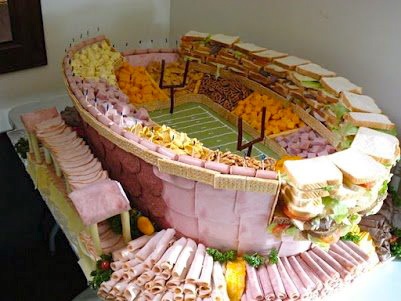
Super Bowl XLVI kicks off on February 5 at Lucas Oil Stadium in Indianapolis, Indiana, and no matter where you’ll be that Sunday, you have plenty of ways to stream the big game to your PC, tablet, or smartphone so you can watch the Giants and the Patriots struggle for supremacy on your preferred device.
Best to test out your streaming options beforehand in case your provider or country doesn’t allow you easy access. Even better, go to your local pub and watch it with friends and strangers!
Written by Jim Dalrymple
The Oatmeal is a very funny web site, skewering all aspects of life, tech and otherwise.
In (dubious) honor of the upcoming Valentine’s Day, The Oatmeal serves up a selection of cards that, after some sober reflection, you should think very hard about your relationship before you buy/send these.
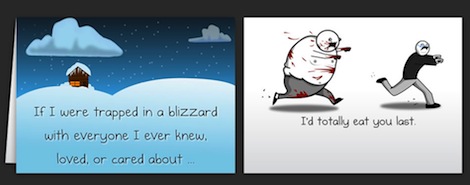
"If I were trapped in a blizzard..."
Matt Alexander is the owner and editor of ONE37.net, a writer, a technology enthusiast and a contributing writer for The Loop.
In recent weeks, I’ve spent a lot of time considering the thought process that has engendered some of the worst managerial decisions of the past year or so. Observing RIM’s spiralling failures, for instance, it’s difficult to discern precisely what has been driving such spectacularly flawed products, announcements, and marketing choices. Even on a much lower end of the scale, amidst the countless gimmicky iPhone accessories on display at Macworld, the bright booths and out-of-place “booth babes” all seem to ask the simple question: “why?”
I’ve written about self-control in the past, but I tend not to think that bottle-opening iPhone cases or BlackBerry Playbooks stem from any semblance (or lack thereof) of control. In my view, the problems lie with the ego of the decision maker. The ego of the individual gives rise to the fallacy of assured success. For the ego-centric executive, for instance, any given concept can be willfully and problematically be perceived as some sort of revolutionary product. But such a perception is wholly and irrevocably disconnected from reality and, moreover, from the end-user.
Yesterday, Co.Design published a piece written by Paddy Harrington arguing for the importance of adopting a school of thought akin to that of a news editor when designing products. Harrington explains:
News logic is a simple filter applied throughout a design project that asks, Is this newsworthy? It is not design just to get noticed. It’s an inherent logic in the new technology culture. Blogs want to get the most views, and what gets views is great content. So working backward, if you design as though a design blog may cover your work, you’re embedding an expectation of quality in the work from the outset of the project, before you even start prototyping. The work benefits, because instead of working in the relative isolation of client/designer, you build in a level of accountability. If what you’re doing is not newsworthy, then why are you bothering to do it? The client benefits because if the designer does her job well, the work will get picked up by a blog and result in more publicity for the client.
The notion of “news logic,” from my perspective, is the perfect embodiment of the egotistical failures of so many companies in the technology market. Driven by a disconnected vision of marketable success, executives – large and small – fool themselves into envisioning their products and ideas as paradigm-shifting, market-upsetting entities, rather than reasonably pondering the viability and long-term prospects of their concepts.
Consider the “Qwikster” debacle. Reed Hastings, in response to widespread discontent with Netflix’s altered pricing structure, weighed his options and chose to pursue an ill-conceived vision of a crowd-pleasing business model. Under the impression that Qwikster would right prior wrongs, Hastings developed a plan that, in his eyes, would make for triumphant headlines, thereby halting an ongoing user exodus. As we all know, Qwikster did indeed make headlines, but certainly not in the manner foreseen by Hastings.
And yet, this is precisely what Harrington calls for:
We imagine how a New York Times headline might read about our project as if it’s already finished and out in the world. By choosing the Times, we choose a discerning media outlet with a highly public face. And by imagining the future in such a tangible way it makes the work more immediate and real. It makes it better.
Relying upon such a perception undercuts the importance of a balanced consideration of an idea. Rather than considering potential flaws, the reliance upon the ego-laced potential for success fosters an environment of self-congratulatory blindness. Although there’s room for weighing an idea within “news logic,” it evidently takes a back seat to the primary focus on the apparent good of an idea.
Look no further than RIM’s new CEO, Thorsten Heins. In his first call as CEO, Heins made the cavalier announcement that RIM’s direction requires little change, thereby implying that the failing company is in great shape. Looking at the many contextual decisions surrounding Heins’ statement, his appointment as CEO, and the ensuing rescission of his initial statement, the entire equation reeks of so-called “news logic.”
The Jawbone UP was released to positive headlines, but once the reviews started rolling in and units began to fail, Jawbone was confronted with the true problems inherent within the development of a product for the headlines. Rather than focusing upon the quality of the product, Jawbone shoddily implemented a concept and pushed it to market. The initial push drew positive headlines, but the true nature of the product betrayed the manner in which it was made, tested, and conceived.
For some, “news logic” may elicit success, but for others, it merely fosters a dangerous tendency toward stifled, ego-centric decision-making. Decision-makers are far better served by focusing upon building a product worthy of the adulation of its users, rather than attaining complimentary press. Envisioning the pleasure of the end user – let’s call it “user logic” – forces the idea to undergo development until it is something good. If the idea is good, it will make its way onto the coveted blogs that Harrington speaks of. Focusing upon the potential for praise and attention alone makes way for the rise of negative headlines and critical responses.
Consider RIM’s trumpeting of the Playbook as the “best tablet in the world” months prior to its release. Now consider Apple’s quiet development of the iPad. Despite widespread contention over the viability of the tablet form factor, Apple developed the iPad with the best interests of the user in mind, and found market-shifting success. RIM, on the other hand, blindly rushed a product through development and thrust it upon the market under the misguided and highly publicized notion that it would reach critical success, and dethrone the iPad. We all know how that turned out.
Preying upon the ego of executives and their respective misconceptions of user demand is precisely what has landed so many companies, including RIM, in dangerous waters, and it’s high time to shed this self-congratulatory ridiculousness. Focus on the user, not the headline. The headline and the praise you so desperately desire will come to you, rather than you to it. The idea should not bend to the will of the press, but grow and evolve based upon the inherent goodness of the initial thought. Pursuing anything else leaves the door open for critical failure and the all-too-common monikers of “unresponsive” and “poorly managed” companies.
One of the ways to make your Super Bowl party even more fun is to play and place a bunch of prop bets.
A “proposition bet” usually means a side bet often made in conjunction with a sporting event but one that does not directly depend on the game’s final outcome. So for example, you can make these bets whether you are a Giants or a Patriots fan and still cheer for your team to win. Visit the royal reels website to place your bets on your favorite sports leagues and other casino games. For players interested in flexible payment solutions, you can also explore https://pivekunkku.com/zimpler-kasinot/ to learn more about casinos that support Zimpler payments.
The Canada-based online gambling site Bovada has some bets you can make with family and friends. Although placing bets directly through their website might raise legal questions, particularly in certain jurisdictions, many people prefer casual wagers among friends during parties. However, recent industry analyses suggest a growing global interest in regulated platforms such as Online Casino Schweiz Echtgeld, which provides users legitimate ways to gamble online while complying with local regulations. For now, casual betting among friends remains a safer choice in most situations.
Bovada has obvious bets like “Who will be named Super Bowl MVP?” and “Who will win the coin toss?” but they also have some fun bets like “Which team will get into the Red Zone first?” and weird bets like “How many times will Andrew Luck be mentioned on TV during the game?”
Prop bets are a fun way to keep people involved in the game while they wait for the commercials to play.