Bracketing Apple’s announcement of OS X Mountain Lion last week was a blog post and a newspaper report from two different sources, both with a common theme – Apple’s supposed treatment of press outlets that run stories which don’t reflect Apple’s best interests. What’s apparent is not that Apple is doing anything out of turn – it’s that some journalists and bloggers have an enormously inflated sense of self-entitlement.
Example one is Jason O’Grady, ZDNet blogger and owner of O’Grady’s PowerPage, a one-time influential blog focused on the Mac. O’Grady has had a contentious relationship with Apple for many years, since the company took him to court for his site’s involvement in the leak of an internal project code-named “Asteroid.”
O’Grady unsuccessful attempts to obtain information about an issue related to the recent controversy surrounding social network Path and its use of Address Book data spurred him to pen a blog piece entitled Apple PR’s dirty little secret, in which O’Grady suggested that Apple is disinclined to cooperate with or offer information to publications that don’t play nice with them.
Is this really a surprise to anyone with a lick of common sense? Apple – and any other company, for that matter – has every right to control the message about new products, and if you’ve proven yourself to be a liability in the past, it shouldn’t be any surprise that you’re persona non grata. O’Grady’s piece is little more than sour grapes at being left out in the cold.
Erik Wemple at The Washington Post picked up the torch late Thursday with his blog piece Apple and the New York Times not meshing. Wemple doesn’t have his own dirty laundry to air. Instead, he suggests that Apple has left the New York Times out in the cold following the recent publication of articles critical of Apple supplier Foxconn’s working conditions – articles that have been echoed in the mainstream media and the blogosphere in the weeks since they ran, which may have provoked Apple to earlier this week announce efforts to audit Foxconn and other Apple suppliers using the Fair Labor Association, or FLA.
With Mountain Lion’s introduction, it wasn’t the Times that Apple CEO Tim Cook spoke to, it was the Wall Street Journal. The Times was left to stock PR quotes to fill out its story. The Journal, Kempel notes, is owned by the same company that owns AllThingsD, the Web site run by Walt Mossberg, who frequently is pre-briefed on Apple products and has, in the past, hosted Steve Jobs on the stage of AllThingsD events. Wemple implies guilt by association.
But Wemple’s claim that the New York Times was left out of the Mountain Lion news cycle falls flat. Wemple only mentions Times columnist David Pogue’s preview of Mountain Lion in passing. Yet Pogue himself noted in his first look at Mountain Lion that he had been using it for a week. This tacitly confirms that Pogue was briefed at the same time as everyone else who was let in on Apple’s secret ahead of time – which John Gruber of Daring Fireball confirmed. So much for Apple turning its back on the Times.
That Apple is managing the flow of information about new products is not news. Apple is no different from any other company in this respect, and if you think otherwise, you’re deluding yourself.
[Editor’s note, 2/20 3:21 PM ET: Updated to reflect Jason O’Grady’s research on Address Book, not Mountain Lion, as previously reported.]
Apple settled a class-action lawsuit brought by users of the iPhone 4 that contended antenna issues caused some them to lose their wireless connection.
“This settlement relates to a small number of customers who indicated that they experienced antenna or reception issues with their iPhone 4 and didn’t want to take advantage of a free case from Apple while it was being offered in 2010,” Apple spokeswoman Natalie Harrison told me on Saturday.
The settlement gives users a free iPhone Bumper case or $15.
I’m going to use the same faulty logic that some people have used to claim that OS X Mountain Lion is being iOS-ified to show how iOS is being Mac-ified.
Calendars: On the Mac first as iCal, clearly Apple added Calendars to iOS to make it look and feel like the Mac.
iTunes: There’s this little Mac app that is on iOS called iTunes where you can buy music.
Mail: You may be surprised to learn that you can send and receive email on iOS. Guess what? OS X first.
Safari: Did you know you can surf the Web on iOS? Yep, Mac first.
iPhoto: Photos are huge on iOS devices, but they were huge first on OS X.
You see my point? Apple added these apps to iOS because they made sense for those users. That’s exactly what Apple did with Mountain Lion — added apps and features that made sense for that OS.
Matt Alexander is the owner and editor of ONE37.net, a writer, a technology enthusiast and a contributing writer for The Loop.
For many, the announcement of OS X Lion was viewed with a great deal of negativity. Perceived as subverting the complexity of OS X, Lion was painted by many as an unwelcome agent of change – an entity seeking to castrate the strength of the Mac. Boasting nascent implementations of iOS features, many were quick to point accusatory fingers at the budding mobile operating system. OS X was courting a younger, sleeker companion, and its personality was starting to change – starting to dress a little better and clean up its act. Many felt betrayed.
As with real life, change is often difficult to comprehend. Particularly when it’s coming from an old friend.
And then yesterday, OS X and iOS announced an impromptu decision. Many had already (reluctantly) seen it coming but most chose to ignore the possibility, hurt that OS X might do that to them (to them!). But now it’s real, the two are moving in together, and that means a lot of things for the end-user.
Of the utmost importance is the fact that such a step does not suggest that the two entities are merging. Separate identities remain, but assets and possessions are shared. The decision comes when two individuals decide that, as a couple, they are better together than they are on their own. Moving in together, the couple is free to communicate more clearly with each other, to really learn about themselves, and to face complex life decisions together. The two are not somehow merging into the same entity, they’re merely moving under one roof, sharing some belongings, and generally learning how to co-exist in a new contextual environment.
While the two might be more closely aligned in such an environment, such a state of affairs does not preclude independent development. Life goes on for them both – it does not simply come to an abrupt and screeching halt.
Despite an evident alarmist response in the press, Mountain Lion makes an enormous amount of sense. Pooling efforts, fostering a simplified environment for the end-user, and ensuring a balanced ecosystem for the future are each affable and logical endeavors. Apple has acknowledged discrepancies in its own ecosystem – arguably its greatest asset – and has taken steps to solidify and smooth the experience for all.
Own a Mac but have no interest in an iPad? Well, lucky for you, you’ll be able to benefit from the same features that make the iPad fantastic on your Mac. Own an iPad and want to stay in tune with your Mac? Fantastic news for you too.
The list of benefits is obvious and it is all possible without any semblance of “convergence.” No matter what the press might have you believe, Macs are not becoming iPhones. Sharing aesthetic leanings and an iCloud backbone does not muddy the definition of OS X, it simply adds to its versatility.
Computing is no longer defined by the complexity you elicit from your machine, it is defined by the degree this complexity is successfully shrouded by simplicity. Looking at Apple’s iLife suite, it’s clear that apps are becoming increasingly easy to use but, for the most part, the complex inner workings remain in tact. Such is the goal of the modern consumer-level software developer, and such is the goal of Mountain Lion.
With a new upgrade cycle and increasingly unified assets, Apple has blurred the developmental lines between two fundamentally different entities. For the consumer, such simplicity is of extraordinary value. It is also a direct shot across Microsoft’s bow.
Considering all of the blustering chatter about the construction of a no-compromise OS in Windows 8, Microsoft has suffered a withering number of attacks on its apparent indecisiveness over its operating system’s aesthetics. Apple, on the other hand, has built two separate operating systems that now communicate seamlessly, appear aesthetically similar, and work in concordance with one another without as much as a second thought.
Whether you’re using an iOS or Mountain Lion device, there are quite literally no practical compromises. Far fewer, in my eyes, than there are with Windows 8.
iCloud facilitates a versatile backbone – one that casts aside the previous bounds of one operating system or another. By focusing on this and encouraging the adoption of its potential benefits, Apple is undercutting Microsoft’s heavy-handed approach with a simple, seamless vision – one that benefits all Apple device users, regardless of their chosen hardware.
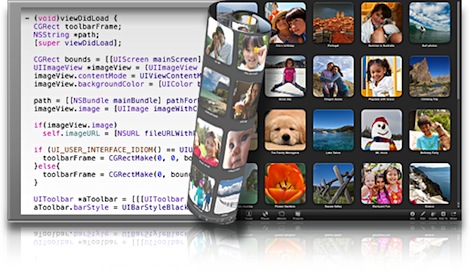
As with any relationship, however, there is potential for negativity. Most obvious to me is the evident lack of aesthetic change planned for iOS in the coming months. Considering Mountain Lion is due for a Summer release – around the same time as iOS is traditionally updated – the inclusion of largely unchanged versions of Reminders and Notes betrays an apparent lack of UI change for iOS. While it is certainly not outside the realm of possibility that I’m wrong, I tend to think LaunchPad, Reminders and Notes all provide evidence of few significant UI changes awaiting us in iOS 6. Corinthian leather is not going away this year, at least.
For the sake of parity and consistency, Apple must now make aesthetic decisions with a view to both OS X and iOS. Ridding iOS of the traditional homescreen interface, for instance, would presumably prompt significant changes to LaunchPad in OS X. Apps, now mostly sharing names, also share aesthetic dependencies. Although this certainly does not hint at the stifling or stagnation of innovative UI design, it provides a definite moment of pause when considering the future of each platform.
Aside from this potential stumbling block, OS X may be edging closer to iOS in a cosmetic sense, but that is not to say the two are becoming one. Furthermore, OS X is most certainly not becoming “like” iOS. Features remain wholly exclusive to each platform dependent upon the various benefits of the hardware and the interactive paradigms. Gatekeeper, for instance, makes perfect sense for OS X but, for iOS, I doubt we’ll see its implementation any time soon. Ultimately, the enormous discrepancy between the two operating systems – touch and cursor – remains constant, and it’s unlikely that will change any time soon.
Despite any hesitance in the press, the alignment of iOS and OS X is a wonderful thing. Although some advances might offend a handful of power users, the changes on display in Mountain Lion are of the utmost service to the average consumer. Simplifying, unifying, and stabilizing a broad ecosystem is an admirable thing – something that we will all inevitably regard with fond reminiscence over the course of the next few years. Together, iOS and OS X present a formidable computing environment – a relationship that, built upon iCloud, is likely to bring a whole lot of innovation to the marketplace.