In very welcome news to iBookstore publishers, Apple has recently added some support options to make it easier to get answers about pesky issues that might be delaying the sale of the next Great American Novel.
According to a bizarre story reported by Chinese state newspaper The People’s Daily, a man recently turned up at an internet cafe in the country with dozens of stolen spacebars. Irritated by the noise made by players of the rhythmic game Audition Online, which involves repeated tapping of the keyboard, the disgruntled gamer had surreptitiously removed the offending keys from the establishment more than seven years previously. But he decided to make amends in order to enjoy a fresh start following his upcoming wedding, returning the spacebars in bulk earlier this month.
Randy Rhoads and Zakk Wylde are two of the greatest guitarist ever. They both write catchy riffs and they can play really fast solos, but that’s not what makes them great for me.
What makes both of these guitarists great is that they feel the notes the play. Everything is there for a reason to make the song or solo sound better, not just faster.
That’s a key distinction between Randy and Zakk1, and many of the guitarists that have come out over the last decade. It’s not how fast you can go, it’s the connection between the listener and the guitar player.
Listen to Randy’s solo on “Goodbye to Romance” or the Classical song “Dee,” both from “Blizzard of Ozz.” You can feel a connection to what Randy is playing.
Zakk’s “Road to Nowhere,” “Mama, I’m Coming Home,” are classic examples of how the guitar is an extension of the song. You can feel it.
If you really want to hear Zakk’s talent, listen to his acoustic albums “Hangover Music, Vol. 6” and “Book of Shadows.” Incredible music.
Of course there are many other guitarists that have this same talent. Eric Clapton, Eddie Van Halen, Jeff Beck, Stevie Ray Vaughan and others. ↩
Creating something new or unique is not terribly difficult. I’ve got great ideas for all kinds of unique products that no one wants but me. Creating something new, unique, different, and innovative that garners mass market success is EXTREMELY difficult and more interestingly EXTREMELY rare. The fundamental challenge and to a degree fear around innovation is that you create something the market does not want. This at its core is the reason why it is easier to follow the leader than blaze a new trail.
In a blog post, Robert Scoble said while Samsung will take a big PR hit and lose $1 billion, it was worth it to copy Apple because it vaulted the company ahead of other smartphone rivals. Samsung also sells an array of products that Apple doesn’t and setting up the comparison with Apple worked out well for the entire company, Scoble said.
That’s true. Samsung has been copying Apple for five years and in that time have become one of market share leaders. That’s something Apple can’t get back.
One of the popular arguments making its way around the Internet since Apple won its patent infringement lawsuit over Samsung is that the verdict will stifle innovation in the mobile industry. I don’t buy it.
Even Samsung used the argument in its statement addressing the loss. “It will lead to fewer choices, less innovation, and potentially higher prices.” That’s just silly.
What Apple’s win prohibits Samsung, and others, from doing is blatantly copying Apple’s design. There is nothing in the ruling that says Samsung can’t continue to innovate. There is nothing that says Samsung can’t release as many phones as they do now or that they have to charge more.
Samsung is using this as a scare tactic, pure and simple. The truth is, if Samsung hadn’t copied Apple and innovated all along, they wouldn’t be in this mess.
In fact, this decision should lead to more innovation, not less. If Samsung is forced to stop copying Apple, there is only one option left — innovate. Instead of sitting back and making their phones and tablets look exactly like the iPhone and iPad, Samsung will now have to do some work. The hardware and software will have to be different, unique and innovative.
The harsh truth is innovation costs money. If Samsung has to raise prices because of that, then so be it. That’s their decision to make, not Apple’s and not the court.
It’s easy and cheap to steal and not improve on someone else’s ideas, but it’s a different story when you have to pay for research and development to create a unique product.
Samsung in a memo to employees after losing to Apple:
History has shown there has yet to be a company that has won the hearts and minds of consumers and achieved continuous growth, when its primary means to competition has been the outright abuse of patent law, not the pursuit of innovation.
By innovation, do they mean blatantly copying Apple?
I’ve seen a number of comments around the Internet about how Apple didn’t exactly go “Thermonuclear” in its win against Samsung. There’s an important point to remember — Steve Jobs wasn’t talking about Samsung, he was talking about Google.
“I will spend my last dying breath if I need to, and I will spend every penny of Apple’s $40 billion in the bank, to right this wrong,” Jobs said. “I’m going to destroy Android, because it’s a stolen product. I’m willing to go thermonuclear war on this.”
“I don’t want your money. If you offer me $5 billion, I won’t want it. I’ve got plenty of money. I want you to stop using our ideas in Android, that’s all I want.”
Because it was so blatant in its copying, Samsung was the most obvious target and allowed Apple to set precedent for its patents. That was the precursor to going thermonuclear.
Google says its not worried about the verdict because “most of these [patents] don’t relate to the core Android operating system.” However, as Seth Weintraub points out, some of the patents relate directly to Google, like the rubber band effect.
Google should be worried. Steve Jobs’ thermonuclear promise is coming.
The court of appeals will review both infringement and the validity of the patent claims. Most of these don’t relate to the core Android operating system, and several are being re-examined by the US Patent Office. The mobile industry is moving fast and all players — including newcomers — are building upon ideas that have been around for decades. We work with our partners to give consumers innovative and affordable products, and we don’t want anything to limit that.
The New York Times Company has agreed to sell the About Group, which includes the About.com network of topic sites, to Barry Diller’s IAC/InterActiveCorp for about $300 million in cash, the company said on Sunday.
The Times plans continue its refocusing on “its core newspaper and Web site operations,” according to the report. IAC, owned by Barry Diller, operates Match.com, Newsweek and The Daily Beast. Diller paid about $100 million less than the Times paid for About.com in 2005.
In the wake of the $1.05 billion verdict delivered Friday in the widely watched U.S. intellectual-property case won by Apple Inc. and lost by Samsung Electronics Co. Ltd., Samsung was battered in Korea Exchange trading Monday, with its share price sinking by more than 7 percent as of Sunday at 11 p.m. EDT.The giant South Korean technology firm shed about $12 billion in market capitalization as a result of the rout, which came on significant volume (i.e., more than double the three-month average).
Digital design giant Autodesk laid off 7% of its workforce Thursday, sources tell Mashable. That totals around 500 employees — including a number of 3D developers and several product managers. Many of the layoffs were handled on a one-by-one basis throughout the day, following the company’s disappointing earnings report.
Autodesk makes a number of 3D and CAD software packages for Mac, along with SketchBook Pro, Smoke online editing and creative finishing software, and more. The company also makes a variety of products for iOS devices.
Neil Armstrong, the first man to walk on the moon, died Saturday, weeks after heart surgery and days after his 82nd birthday.
After the dog-and-pony shows NASA and the federal government put Armstrong and the other Mercury, Gemini and Apollo astronauts through in the 1960s, it’s no wonder Armstrong so jealously guarded his privacy later in his life. Regardless, he’s a hero to generations of Americans. Rest in peace, Neil Armstrong.
Neil Armstrong, the first man to walk on the moon, died Saturday, weeks after heart surgery and days after his 82nd birthday.Armstrong commanded the Apollo 11 spacecraft that landed on the moon on July 20, 1969, and he radioed back to Earth the historic news of “one giant leap for mankind.” He spent nearly three hours walking on the moon with fellow astronaut Edwin “Buzz” Aldrin.
Today was an important day for Apple and for innovators everywhere.Many of you have been closely following the trial against Samsung in San Jose for the past few weeks. We chose legal action very reluctantly and only after repeatedly asking Samsung to stop copying our work. For us this lawsuit has always been about something much more important than patents or money. It’s about values. We value originality and innovation and pour our lives into making the best products on earth. And we do this to delight our customers, not for competitors to flagrantly copy.
“We didn’t want to give carte blanche to a company, by any name, to infringe someone else’s intellectual property,” Hogan told Reuters a day after the verdict was delivered.
At least in this part of the world, buying from the Mac App Store isn’t a preference. It’s the only way. There are very few apps on my Mac that haven’t been bought from the App Store, and that isn’t going to change anytime soon.
I never really considered this before. Without credit cards, it’s not really possible to purchase apps directly from the developer, so people use Gift Cards to stock up their iTunes account.
Apple and Samsung have both infringed each other’s patents on mobile devices, a South Korean court ruled today. Judges in Seoul said U.S. based Apple had infringed two patents held by Samsung, while the Korean technology giant had violated one of Apple’s patents.
While most of the tech blogosphere was focused squarely on the Apple/Samsung case verdict in California, judgment was returned in another case in Samsung’s home turf of South Korea.
Apple was ordered to remove the iPhone 3GS, iPhone 4, iPad and iPad 2 from sale in South Korea; the panel of judges said that Apple infringed two of Samsung’s wireless technology patents.
A split decision ruled that Samsung violated Apple’s “bounce back” patent, which affects scrolling functionality – Samsung was ordered to pull the Galaxy S2 and other devices that use that feature.
“Today’s verdict should not be viewed as a win for Apple, but as a loss for the American consumer,” Samsung said in a statement. “It will lead to fewer choices, less innovation, and potentially higher prices. It is unfortunate that patent law can be manipulated to give one company a monopoly over rectangles with rounded corners, or technology that is being improved every day by Samsung and other companies. Consumers have the right to choices, and they know what they are buying when they purchase Samsung products. This is not the final word in this case or in battles being waged in courts and tribunals around the world, some of which have already rejected many of Apple’s claims. Samsung will continue to innovate and offer choices for the consumer.”
“Samsung will continue to innovate?” I’d be satisfied with starting to innovate.
A jury on Friday found in favor of Apple in its patent infringement case against Samsung. After finding that Samsung willfully infringed a number of patents, the jury awarded Apple $1 billion in damages.
“We are grateful to the jury for their service and for investing the time to listen to our story and we were thrilled to be able to finally tell it,” Apple said in a statement provided to The Loop. “The mountain of evidence presented during the trial showed that Samsung’s copying went far deeper than even we knew. The lawsuits between Apple and Samsung were about much more than patents or money. They were about values. At Apple, we value originality and innovation and pour our lives into making the best products on earth. We make these products to delight our customers, not for our competitors to flagrantly copy. We applaud the court for finding Samsung’s behavior willful and for sending a loud and clear message that stealing isn’t right.”
Apple stock rose $11.73 to $674.95 in after hours trading.
A federal jury in San Jose, Calif., has found Samsung guilty of infringing a number of Apple patents and said that the Korean electronics giant should pay more than $1 billion in damages.
The Verge has live coverage of the jury verdict in the Apple vs. Samsung trial. As we post this, Samsung has been found to be in violation of a number of Apple patents with its products – but not all of them, and it’s not guilty of everything it was accused of. It’s a complicated verdict, so read on for details.
Promoting violence between political parties while using the presidential candidates as fighters in the game is disrespectful. Possibly even dangerous considering the current extremely heightened anger between real-life political parties. It’s irresponsible for Rock the Vote! to attach their name to this and degrading for a well respected game development house like Chair Entertainment to release it.
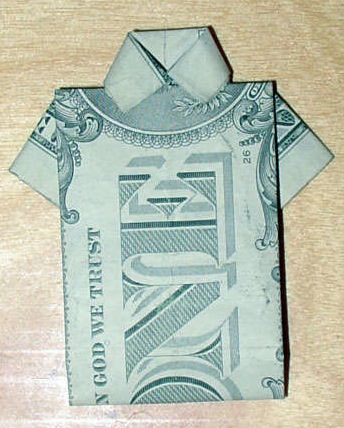
When I was a kid, I had a fascination with origami but like so many things I’m fascinated by, I could never master it. But the instructions to make this “Dollar Bill Shirt” look easy enough that even I can do it. The site also has instructions on how to make a “Dollar Shirt (with cuffs) and Pants” and even a “Dollar Bill Digital Camera”!