February 6, 2014
Written by Shawn King
Salon:
I don’t remember any of what I’m about to tell you. I died, in a way, and was reborn, with the same physical form, but not the same mind. I still to this day sit around with my family and listen to stories about the other Su.
Fascinating and terrifying story.
Written by Dave Mark
You had me at enhanced autocorrect. Huzzah!
As described, the method would afford a smartphone user the opportunity to write a message, press send, then review any autocorrected words before the message is actually transmitted. Compared to current techniques, which only allow users the chance to change autocorrected words prior to hitting send, the system gives a type of second chance if activated.
Gmail on my Mac has an Undo extension that delays all email sends for a configurable number of seconds. I’ve been using this for years. Wonder if the Apple patent precedes Google Undo or if there is some functional difference in the Apple patent that I’m missing (which is likely the case).
That said, enhanced autocorrect and automatic language selection for me, please.
What do AC/DC, The Beatles, The Eagles, Led Zeppelin, Garth Brooks and The Rolling Stones have in common? Everyone, except Garth Brooks, are world class bands that have their music available for sale on iTunes.
Garth clearly hasn’t seen fit to give his fans the opportunity to purchase his music on iTunes, yet. Apparently, Brooks wants his music sold in album-format only—no single song sales are allowed. This clearly goes against everything Apple believes for how music should be sold on iTunes.
As a music fan, I have to agree with Apple on this. To be clear, I am a fan of Garth Brooks. I had a number of his CDs years ago, but unfortunately through moves and having them in the car, a couple of them broke. It happens—not a big deal.
Except I no longer buy CDs—I haven’t since iTunes opened. All of my music is purchased on iTunes, put on my iPhone and iPod and streamed in the car.
So what does my scenario mean for Garth Brooks. He sees no sales from me. None. Garth can argue all he wants about album sales, but the fact is, he’s missing out on sales every single day.
It’s so bad now that even music stars like Blake Shelton are calling out Garth Brooks on Twitter to put his music on iTunes.
Come on Garth, join the big boys, and do the right thing. It’s time to stop living in the 1990s.
A video warning all Sochi Olympic visitors that their electronics will be immediately hacked as soon as they turn them on has been circulating widely. The video is below.
There is a lot to digest here. First, there’s the alarming open:
As tourists and families of athletes arrive in Sochi, if they haven’t been warned, and if they fire up their phones at baggage claim, it’s probably too late to save the integrity of their electronics and everything inside them.
Yikes. Can this possibly be true? At first blush, this sounds like an incredible overreaction. This report was filed by NBC’s Brian Williams and Richard Engel, not some novice journalist. There’s background assist from Kyle Wilhoit, a Senior Threat Researcher at Trend Micro.
Jump to about 1:13 in the video to watch Engel open a brand new MacBook Air. Made me want to cry. Doesn’t give me a lot of hope that these two know what they are doing. But I digress.
The team went to a local wifi hotspot and fired up a smart phone. Immediately, they see a downloading message. Clearly an Android phone. Wilhoit concludes that they are being hacked, that malware is being installed on the phone. Wilhoit does not say how he knows this, just that it’s malware. I’d like to know more. Could it be an update? Perhaps a file the phone needs to deal with an unknown carrier?
Next, the team heads back to the hotel, where they had left two brand new computers up and running. One of them was a brand new MacBook Air (with a horribly mangled box). As the video says, the hackers came sniffing around within minutes and within 24 hours, the hackers had taken over both computers.
Again, I’d really like to know more. Did they leave both computers in their default state? Did they enable any firewall or take any steps to protect the computers? Were the computers purposely made easy to penetrate?
You can read about Wilhoit’s techniques here (thanks to Steve Hayman for the link). While interesting, much of the background is missing. He promises more tomorrow.
If I was traveling to Sochi, I would heed the advice in this video and leave any important data at home. Assume that the contents of your smart phone and computer will be copied while you are there and only take what you can afford to have taken.
I look forward to learning more about this scenario.
UPDATE: Follow this link for a far less edited version of the video. They were purposely careless. The phone is a Samsung Android phone. They followed a URL that led to an apk file and knowingly downloaded the unknown application. True, many people would do that, but anyone with even a slight bit of tech savvy would know not to do that.
Next, they purposely opened an unknown email attachment on their computer. Yeesh. I call BS on the whole report. Disappointed in NBC.
Written by Jim Dalrymple
No matter how good the intentions or the system, there will always be those that try to take advantage. Apple’s App Store is no different.
Written by Jim Dalrymple
James Martin:
I’m working on an initialism for a new standard of RSS Synchronization. It’s really, really simple synchronization, so the working title is RRSRSSS.
Sometimes you need an article like James’ to wake you up and realize you don’t have to read the same news from 10 different sites to enjoy or get the most out of RSS. Plus, it was funny.
February 5, 2014
Written by Jim Dalrymple
Apple and Burberry today announced that iPhone 5s is being used to capture and share beautiful photos and video before, during and after the Burberry runway show in London on Monday, September 16. Using the all-new iSight camera on iPhone 5s, Burberry is shooting high quality photos and video for runway and beauty looks, product details, and backstage moments. The collaboration is reimagining how Burberry engages consumers, paving the way for significant changes in how they capture and share their content.
Great behind-the-scenes look at how the iPhones are mounted and used.
Written by Jim Dalrymple
In theory using photographs in your story should be simple, but it’s really not. Medium does a good job of letting users integrate photos, but as you scroll through some stories, you quickly see that some people just don’t get it, while other’s stories look great.
Written by Jim Dalrymple
It’s called NameTag, and in Robocop-like fashion, the app can scan a person’s face and compare it to a records database consisting of millions of people.
If NameTag successfully finds that person, it spits back tons of information about them, including their full name, their relationship status, what school they went to, their current occupation, their interests, and more. It’ll even tell you if that person has a criminal record.
Google tells BGR that it has a ban on facial recognition apps. In other words, they haven’t found a way to make advertising dollars on that part of the creepiness yet.
When I look at Apple software and hardware, I’m amazed with the simplicity of what sits before me. It’s not simplicity that makes you wonder what to do with it and it’s not simple for the sake of being simple. It immediately makes sense. That sense of wonder is replaced by a need to touch it and interact with it.
Apple products offer a sense of clarity not found in most products on the market today. Clarity of design, clarity of purpose and clarity of function.
This is why a young child can sit down in front of an iPad and instantly know how it works. On the same device, an executive can parse data and make business decisions that affect thousands of employees. It’s clear to both of these groups—and many others—how it works.
New customers to Apple will often ask me how they find something in a Mac or iOS app, or how they do a certain task. My answer has been the same for years: “Think of the simplest way to do it. That’s the way Apple will do it.”
More often than not, I’m right. If you ask someone what they believe the simplest way to get something done is, they will usually find it. Ask them the same thing on a PC and they could be lost for days.
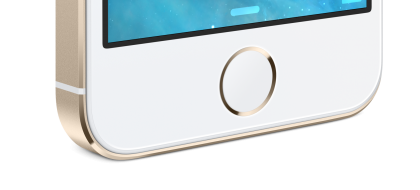
Consider the iPhone. It has one button. If you put an iPhone in front of someone that hasn’t used it before, they know instinctively what they should do. Pressing that one button opens up a whole new world. There is nothing else they can do, but to press on that button. It’s simple, it’s clear, and it works.
The most daunting task for any company is to make their product so intuitive that any person, anywhere, will be able to pick it up and start using it. Apple has been able to do that in a way that has shaped an entire industry.
Providing that clarity isn’t as easy as some may think. Microsoft, for example, tried to make Windows 8 simple—one operating system for every device. No Compromises. On the surface (no pun intended), this sounds like a noble goal. The mistake they made is trying to shoehorn a software product into a device that it wasn’t meant to fit in. The proverbial square peg in a round hole.
Microsoft did its best to convince people that having one OS was the best option for every aspect of your life. It wasn’t. Software that isn’t made for a touch-enabled device provides endless hours of frustration—you feel as though your on a desktop; the software is made for a desktop; but it wants you to tap like a tablet. Confusion and frustration ensues.
One of the triumphs for Apple over the last decade was providing users with powerful software with a very simple interface. iPhoto, iMovie, Keynote and others showed people that software didn’t have to be complicated to be useful. That’s not to say that Apple’s consumer-level software isn’t powerful, because it is.
GarageBand, for example, uses the same audio engine found in Logic Pro, Apple’s professional digital audio workstation, but GarageBand has allowed millions of musicians to record music easily.
Generally, people don’t care how something is executed once they click or tap on an application button. The fact that it’s done and the results are what they expected, is more than enough. Apple understood that and made it an integral part of its software strategy.
Clarity also extends to the product line itself. If you want an iPhone, you have two choices: the newest iPhone 5s or the iPhone 5c. Very clear and simple choices. The differences in these choices are also very clear—The iPhone 5s provides newer hardware features like Touch ID. If you want the latest and greatest, then that’s the phone for you.
Compare that to Samsung’s Galaxy S4. Even sites that regularly report on Samsung are frustrated with the over one dozen models available for sale.
Companies like Samsung throw out as many products as they can and see what sticks. To me, this shows a complete lack of confidence in what they are offering in their product line. When you add Android’s lack of upgrades for certain models, you end up with the complete opposite of everything Apple offers to its customers.
Knowing your future upgrade path, operating system support, app ecosystem, and indeed, what you can actually do with the device, provides something that everyone else is missing: Clarity.
Written by Dave Mark
Last year, we heard the great anecdote about an Apple engineer porting Mac OS X to Intel-based hardware.
Date: Tue, 20 Jun 2000 10:31:04 -0700 (PDT) From: John Kullmann jk@apple.com To: Joe Sokol Subject: intel
i’d like to discuss the possibility of me becoming responsible for an intel version of MacOS X.
whether that’s just as an engineer, or as a project/ technical lead with another person – whatever.
i’ve been working on the intel platform for the last week getting continuations working, i’ve found it interesting and enjoyable, and, if this (an intel version) is something that could be important to us i’d like to discuss working on it full-time.
jk
Follow the headline link to read about this from a different perspective, that of ex-Sony president Kunitake Ando.
Written by Dave Mark
Very interesting op-ed piece from the New York Times about the limits of technology and the human traits that will become valued in the coming decades.
Certain mental skills will become less valuable because computers will take over. Having a great memory will probably be less valuable. Being able to be a straight-A student will be less valuable — gathering masses of information and regurgitating it back on tests. So will being able to do any mental activity that involves following a set of rules.
But what human skills will be more valuable?
In the news business, some of those skills are already evident. Technology has rewarded sprinters (people who can recognize and alertly post a message on Twitter about some interesting immediate event) and marathoners (people who can write large conceptual stories), but it has hurt middle-distance runners (people who write 800-word summaries of yesterday’s news conference). Technology has rewarded graphic artists who can visualize data, but it has punished those who can’t turn written reporting into video presentations.
More generally, the age of brilliant machines seems to reward a few traits. First, it rewards enthusiasm. The amount of information in front of us is practically infinite; so is that amount of data that can be collected with new tools. The people who seem to do best possess a voracious explanatory drive, an almost obsessive need to follow their curiosity. Maybe they started with obsessive gaming sessions, or marathon all-night study sessions, but they are driven to perform extended bouts of concentration, diving into and trying to make sense of these bottomless information oceans.
Great read.
Written by Dave Mark
Tim Cook went to Turkey and met with Turkish President Abdullah Gül. Things must have gone well, because Gül went public with a request for Apple to set up shop and invest R&D money in Turkey.
When it was announced that Cook was in Turkey to visit Gül, it was speculated that the meeting would revolve around the initiative that could be worth between $3 billion to $4 billion.
FATIH is an aggressive high-tech educational plan that looks to put up to 15 million tablets into the hands of Turkey’s students. Apple VP of Education John Couch previously met with Gül to discuss the deal in 2013. Turkish Prime Minister Recep Tayyip Erdoğan, the man behind FATIH, subsequently visited Apple’s Cupertino headquarters to get a better understanding of the iPad in education technology.
Good business for both sides.
Written by Dave Mark
Interesting take from the Washington Post on Microsoft’s CEO choice.
While Google founder and CEO Larry Page boasts about his company taking “moon shots” and Zuckerberg promises to “move fast and break things,” Microsoft has fallen behind the technological curve after underestimating the importance of Internet search more than a decade ago and reacting too slowly to the rise of mobile devices during the past seven years. Meanwhile, the sales of personal computers running on Microsoft’s Windows software are shrinking.
and
Just as Microsoft founder Bill Gates and Apple Inc. founder Steve Jobs would never have considered working at IBM Corp. in the 1980s, today’s entrepreneurial whiz kids scoff at Microsoft’s overtures.
“Going to work at Microsoft could make it look like you are going back to the dark ages,” says Richard Metheny, a management coach for the executive search firm Witt/Kieffer in Chicago. “It’s a well-entrenched business that has had trouble lately figuring out how to play in this new world.”
and
Microsoft “is like a car that still has a full tank of gas, but it’s just an old model,” Carrey says. “There are a lot of great tech executives who yearn for that kind of challenge, especially with a bucket of cash to make acquisitions and do some really fun, cool stuff.”
I can’t imagine anyone thinking this about Apple. Apple is just a little younger than Microsoft, but has the forward-thinking DNA built deeply within its bones.
Written by Dave Mark
When I first saw this design, I thought the brackets needed to be secured to the Mac Pro body somehow. A few emails back and forth with the MacLocks folks and I am convinced. The only way someone will walk off with your Mac Pro is if they cut the security cable. And even then, it will be difficult for a thief to ever get the lid off so they can use it. Granted, this will not stop a determined thief, but for a public area, this is better than no security.
As you can see by the video below, the brackets slide into place behind the cover. Next, the power cable is plugged into the Mac Pro, the brackets slide together to encompass the power cord and the lock locks the whole thing in place. Nice.