February 27, 2014
Van Damme’s Zero Gravity Split
I just want to know how they got Van Damme into space.

I just want to know how they got Van Damme into space.
Film School Rejects:
The “In Memoriam” segment (of the Oscar telecast) is always a must-watch portion of the show, even if its biggest draw isn’t always a desire to honor the deceased talents of Hollywood, it’s to see who leads off and ends the piece, who was left off, and who you totally forgot passed away this year.But how does one actually land on the list? Not surprisingly, it involves a paper trail, voting, and plenty of hurt feelings.
As expected, the first requirement is “Be dead”.
code:deck:
code:deck is a standard playing card deck sporting a stylish modern design. Each individual card features a code excerpt describing it in one of many programming languages.
Ever heard someone described as a “card carrying geek”? Well now, you can be a card playing geek.
For my part, I have no clue how the code relates to the card it is on.
The Atlantic:
The time that ends up on your smartphone—and that synchronizes GPS, military operations, financial transactions, and internet communications—originates in a set of atomic clocks on the grounds of the U.S. Naval Observatory. Dr. Demetrios Matsakis, Chief Scientist for USNO’s Time Services, gives a video tour.
A little dry (and oddly shot/edited) but still an interesting overview of “the nation’s time keeping”.
This is a fair question. Why did Al Franken write this letter to Tim Cook, but not a peep from him to Samsung? Samsung has clearly bitten off a much larger piece of security exposure with their approach. I smell unfair treatment.
Good job by Yoni Heisler.
Wired.com:
We need to consider the consequences of this latest batch of apps and tools that remind us to contact significant others, boost our willpower, provide us with moral guidance, and encourage us to be civil. Taken together, we’re observing the emergence of tech that doesn’t just augment our intellect and lives — but is now beginning to automate and outsource our humanity.
Leaving aside the juvenile frat boy “bro” word, the app they talk about (which I’m really hoping is a parody app) is offensive because being in an adult relationship means committing to it – not outsourcing it to some app.
Nikon Rumors:
Nikon published a new technical service advisory where they announced a free cleaning and free shutter replacement for all D600 owners, even those with expired warranty. You can send your camera even if you do not have a problem.
If you have an affected D600, go to the Nikon site and schedule your free service. If your D600 isn’t exhibiting any of the (sadly common) dust/oil issues (mine isn’t), hold off on scheduling the service until the first mad rush is over but make sure you definitely do it some time in the next three to six months.
Apple on Thursday added Kendrick Lamar to its upcoming iTunes Festival SXSW. Support acts ScHoolboy Q, Isaiah Rashad, Band of Skulls and Capital Cities have also been added.
Apple announced iTunes Festival SXSW earlier this month with a stellar line-up of artists that include Coldplay, Imagine Dragons, Pitbull, Keith Urban, ZEDD and the legendary Willie Nelson.
Just yesterday Apple added Soundgarden to its list of performers. This isn’t just any Soundgarden show—it’s the 20th anniversary of “Superunknown,” one of the bands best albums. To celebrate the occasion, Soundgarden will perform the entire album at iTunes Festival.
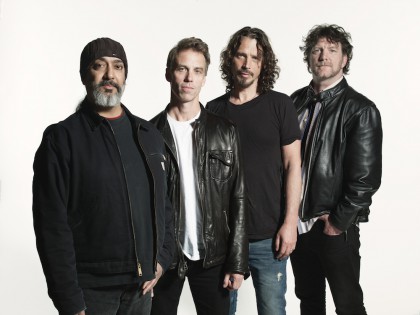
Photo Credit: Michael Lavine
All five nights of the iTunes Festival will be available for free as a live and on-demand stream via the iTunes Store on your iPhone, iPad, iPod touch, Mac or PC. Performances can also be seen in the iTunes Festival app on your iOS device or with Apple TV, the company said.
This show is quickly becoming one of the must-see shows of 2014. Soundgarden and Willie Nelson alone promise to make it an incredible experience.
iTunes Festival SXSW is being held March 11-15, 2014 at ACL Live at the Moody Theater in Austin, Texas.
There’s a bit of backstory here but all you really need to know is, when boys have unlimited funds, we will pull awesome pranks on our buddies. The best line in the video is when the friend says, “Travis was pretty rough on Jeff and Travis and I are friends so I was excited to help Jeff respond.” Ladies – that’s how men think. Thanks to Rob Griffiths for the link.
Google’s Android head Sundar Pichai:
“We cannot guarantee that Android is designed to be safe… If I had a company dedicated to malware, I would also be addressing my attacks on Android.”
Those are the first true words to come out of Google in a long time.
Forbes has become the place to write if you don’t have a fucking clue what you’re talking about. Such is the case with one of their latest articles, but Zach Epstein at BGR does a good job pointing out the mistakes and reality of the iPhone business.
This is the seventh year in a row.
The developers behind Castro shared some numbers after figuring out a great way to ask for App Store reviews.
Interesting article from Seeking Alpha (free reg-wall) on Apple’s strategic investment in GT Advanced Technologies (GTAT), a company that develops high-grade sapphire. Lots of financial info and comparisons with Liquidmetal Technologies, but this is the part that caught my eye:
The big knock on the use of sapphire in things like mass-market consumer electronics devices has always been cost. With Corning’s (GLW) Gorilla Glass controlling most of the smartphone display market, the volumes have enabled the company to drive-down costs to a level that has created significant barriers-to-entry. With this new arrangement, all signals point to Apple wanting to use sapphire…and a lot of it. Such volume could prove to be the catalyst needed to further get the material down the cost curve and into new mass-market devices.
Barrier to entry is a huge business advantage. Anything you can do to prevent other companies from doing knockoffs is a win. A great strategic relationship for Apple. Interesting analysis.
This is pretty awesome. A solid and complex chain of logic. If anyone knows anyone at Pixar, I’d love to know if this is a true part of the “Toy Story” backstory.
I’m not bashing Google Glass, I certainly see the value of a heads up display that is hands free and connected to the internet. But this situation is inevitable. Who wants to be recorded without their permission?
A San Francisco woman who says she was attacked at a bar on Haight Street after refusing to stop wearing Google Glass has released video footage of the incident that she filmed with the new technology that spurred the confrontation in the first place.
“This is the video that I got on Google Glass at Molotov bar on Haight Street after being verbally accosted and flicked off by the Asian looking girl, I turned on the video, and after I told them I was doing so they got pissed and came after me,” Slocum wrote.
“Unfortunately, I had not extended the video so it cuts out after 10 seconds. Here you can see them — two people, a male and a female — trying to block the camera. The guy waving his hands in my face here later rips the Google Glasses off my face and ran out of the bar,” she wrote.
Not sure if there is a legal difference between this sort of video and the video recorded by unseen security cameras. But I suspect people feel differently about going into a bar with a security camera and being recorded by someone wearing Google Glass. I know I do.
The video in question is below.
Google is lobbying officials in at least three U.S. states to stop proposed restrictions on driving with headsets such as Google Glass, marking some of the first clashes over the nascent wearable technology.
This angers me. If someone is killed because a driver was distracted by something on Google Glass, why is that any different than someone killed by careless texting? If your focus is held by an interaction with Google Glass, your focus is not on the road.
Over the past year or so, there have been a number of stories of iPads school rollouts where kids were finding ways to override the iPad’s intended use (for education), overriding the firewall to gain general access to the internet. The situation became a PR problem for Apple. Sounds like they’ve solved it.
Schools in LA had deployed a large amount of iPads, but had to recall them after students were found deleting the enrollment profiles on their devices. This allowed the students to use them to gasp browse the web as they pleased and install unapproved apps on their personal units. The anarchy would not stand and the district began reconsidering its rollout — which has since resumed. These kinds of high-profile flubs likely didn’t do anything to help the momentum of Apple’s organizational rollouts. This enforcement should allow customization, while preventing circumvention of IT rules.
In short, it should make iPads even more attractive to these markets.
I get the school’s point of view here. General access to the web is a distraction, as well as an invitation for cheating. A school needs to be able to control how a student uses their iPad, at least during school hours. Glad to see Apple learned from this experience. These improvements go well beyond schools, also benefit anyone managing IT for large organizations. Good stuff.
Arizona Governor Governor Jan Brewer on Wednesday vetoed a controversial bill that would have, in effect, legalized wide-ranging discrimination of homosexuals as an extension of religious freedom. Apple, along with a number of other major U.S. corporations, banded together to have the bill shot down.
Good.
Quartz:
At its height, almost three-quarters of American households bought and kept orange juice in their refrigerator. But shifting American eating habits—which stigmatize sugar and leave little time for breakfast—and surging juice prices have done significant damage to American demand.
As a kid, we never had orange juice for breakfast (too expensive) and the only time I ever drink it now is if I go to a diner for breakfast and then I crave it. When’s the last time you had a glass of OJ? For our non-North America readers – was/is orange juice ever a staple of your breakfast?
Fast Company:
Twenty years of wild parties, legendary product launches, and heated controversies: how an unlikely mix of “nerds, rock-and-roll hippie freaks, and business suits” grew into the tech world’s most-talked-about annual gathering.
It’s interesting to read where SXSW came from. Keep an eye on the buzz that surrounds various apps, startups, services and technologies that invariably rise out of the show each March.
Vice Australia:
A coal mine is currently burning the hell up in Australia. For obvious reasons fires in coal mines are especially problematic—the exposed coal face burns, just like coal should, and smoulders through the underground seam where it’s safely protected from any firefighting. if you find yourself in Australia, avoid Morwell. It’s just not a healthy town.
Brings to mind the (still – since 1962) burning coal mine in the now mostly abandoned town of Centralia, Pennsylvania.
Many magazines are going digital only, but “The Great Discontent” wants to take it’s magazine to print.
Clearly, this is not good for Avid.
Ben Bajarin:
Carriers own a cell tower that they upgrade to provide faster service and broader access. That’s about it. They used to have much more differentiation than they do today. Some had proprietary devices or solutions. Some were known for better quality or were the only ones available. Those days are long past in most cases. Pricing is a particularly strategy that T-Mobile and Sprint are trying to compete with, but they have simply embraced their “dumb pipe-ness” sooner than other carriers.
He’s right.
BlackBerry, once a must-have device for every business executive and government official because of its pioneering secure email service, has hemorrhaged market share to Apple Inc’s iPhone and rival devices running on Google Inc’s Android software.
Clearly BlackBerry doesn’t see competing with Apple will work, so it’s going after the low-end of the market to boost its sales.
SMS startup Nexmo is finally launching its voice service at Mobile World Congress. The new set of application programming interfaces basically allows any app developer to embed calling features into his apps and set up voice services in the cloud.
Watch this space.
Congratulations to Apple. Well earned. From the awards page:
Apple iPad Air
Precision-engineered to weigh just one pound, iPad Air is 20 percent thinner and 28 percent lighter than the fourth generation iPad, and with a 43 percent narrower bezel the borders of iPad Air are dramatically thinner. iPad Air’s Retina display makes web pages, text, images and video look incredibly sharp and realistic, and the new power-efficient A7 chip allows the battery to be even smaller, helping reduce the overall volume by 24 percent from the previous generation while doubling its performance and maintaining its up to 10-hour battery life.
Judges’comments
The iPad Air packs class-leading performance in an attractive and svelte frame, while its ecosystem has an undisputed advantage in the number of format-optimized apps
Couldn’t have said it better myself.