September 21, 2009
Like most guitar players, I spend a lot of time and money making sure I have the best gear I can afford to make my tone the best it can be. One item that’s often ignored when recording into the computer, is a quality audio interface. (more…)
Google has contradicted Apple’s letter to the FCC, saying that Apple did, in fact, reject its Google Voice app entry into the App Store. (more…)
Microsoft on Thursday promoted a new Web site that allows students to purchase Windows 7 for $29, the same price Apple is selling its new operating system, Snow Leopard. (more…)
September 17, 2009
Mac OS X Snow Leopard is proving to be a very popular release for Apple, according to a new report from market research firm, NPD. (more…)
September 15, 2009
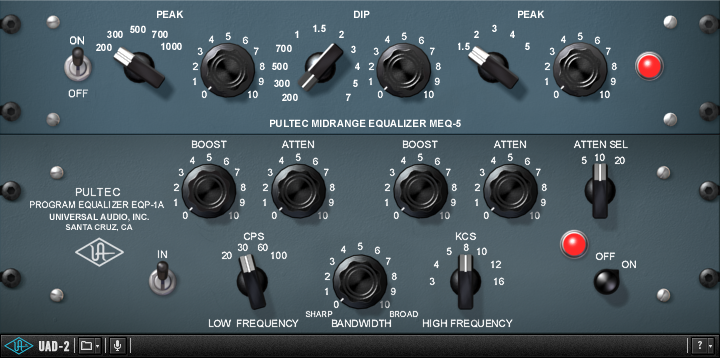
I made some pretty bold statements when I first wrote about Universal Audio’s plug-ins for the Mac. I’ve had quite a few questions from that article, so I thought I’d try to answer them here.
In the original article I said, “While there are a lot of plug-in choices, I have found none better than Universal Audio (UA).”
A lot of you wrote and asked if I had tried this plug-in or that plug-in. I can assure you that over the years I have tried pretty much everything available. I not only stand by my statement, I will say that UA is simply the best set of audio plug-ins on the market.
Another bold statement. Let me explain why.
Every bit of music has a limit on the range it can occupy. Unfortunately, some of today’s music takes every last bit of that range and packs it completely full of sound. Some obviously like this, but personally I like my music to have room to breathe.
As an example: have you ever listened to a song that goes into a soft bridge section; the guitars get quiet; the drummer is tapping on a cymbal; the singer is talking; and then the band starts to get back into the swing of things and with an amazing bang they are rocking again.
Did you notice that sometimes in those sections, things don’t really quiet down? In some mixes those quiet parts are just as loud as the main section of the song. To me, it’s missing a major dynamic of the music.
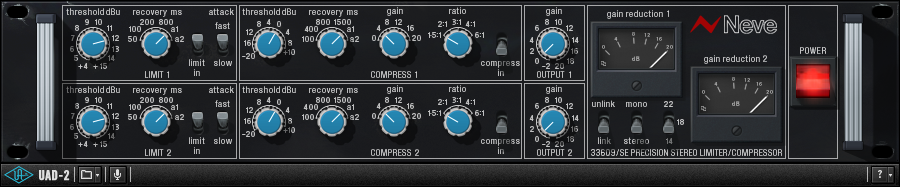
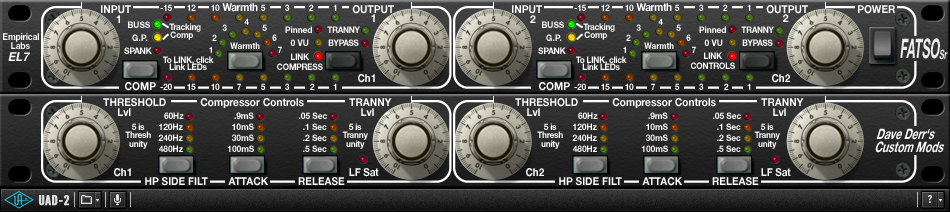
I find that the UA plug-ins allow me to control that range of frequencies better than anything else. Sure, there are a lot of EQs and compressors out there that can do the job, but not like this.
UA has taken the time to model some of the world’s best vintage gear and make it accurate. I feel like the control I have is real, not control over some made up space that doesn’t even exist in the range of the song.
Sometimes it seems like the music I’m listening to is trying to break out of its range and that’s too bad. That range needs to be managed.
I also said in the original article that I liked the “warmth” the plug-ins provided. Some have asked exactly what I meant by that.
“Warmth” is a difficult thing to explain. Some music is loud and pounding — that’s not warmth. Some music is high-pitched and tinny sounding — that is not warmth. I guess the warmth is the fullness of the music without wanting to rip my ears off.
You can find that in classical music, metal, hard rock and every other genre.
My UAD-2 Quad costs $1,899, but it is one of the best investments I’ve made for my music. I have all of the plug-ins and I have different uses for them.
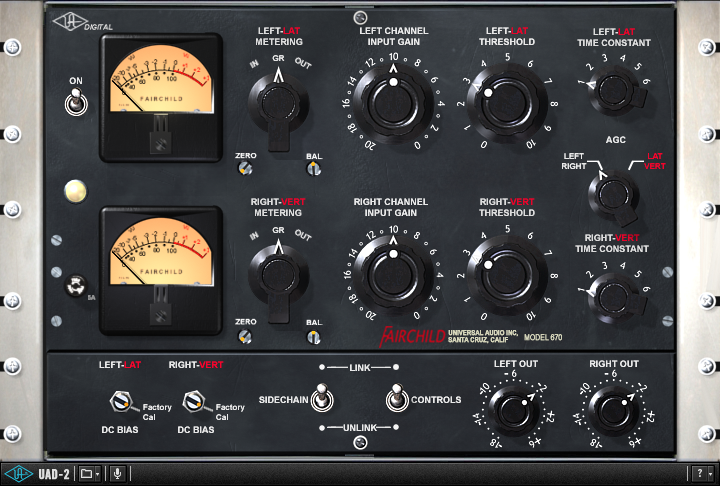
I love the sound of a Fairchild Compressor on an acoustic guitar. For me, it just brings out that natural sound that I like in an acoustic. I also use the Neve 1081, Neve 1073, LA-2A and the 1176 Compressor. They all give you something different.
Not only does UA model its software to be like the original, they still make some of the originals. All of the analog gear is handmade and from what I’ve heard, it sounds amazing.
I never thought I’d do this, but when time and money allow, I’ll be picking up some of their analog gear as well.
I spend a lot of time and energy on my music. I’m glad to deal with a company that does the same thing with its products.
September 14, 2009
According to new data from market research firm NPD, Apple is on track to increase its Mac sales for its September quarter over the same period last year. (more…)
September 11, 2009
If you use Cakewalk’s V-Studio 100 and have already upgraded to Mac OS X Snow Leopard, you’ll be pleased to know that the company on Friday released new drivers for the audio interface. (more…)
September 10, 2009
There have been a lot of questions about the quality of the iPod nano’s video camera, so I thought I’d enlist the help of a friend and test it out. (more…)
The big question on everyone’s mind yesterday was about cameras. Why the iPod touch didn’t get one and the iPod nano only got video recording and not the ability to take still photos. (more…)
September 9, 2009
I got one of the new iPod nanos that has the built-in video camera this afternoon and thought I’d give you my first impressions. (more…)
The posts are in reverse chronological order (newest on top). Please refresh your browser to see the latest. (more…)
September 8, 2009
Apple’s iPhone 3G and iPhone 3GS continue to top the charts for wireless partner AT&T, according to a new research report from Piper Jaffray. (more…)
September 4, 2009
One of my favorite applications will see a major revision next week, as the Pixelmator Team updates it image editor, Pixelmator. I’ve made no secret of how much I like Pixelmator, so I thought I’d put the new version through its paces and see how it works. (more…)
The wait is almost over. iPhone 3G and iPhone 3GS users will have to ability to send and receive MMS in about three weeks, according to AT&T. (more…)
I don’t have the biggest iTunes library in the world, but it’s big enough to become unmanageable sometimes. That’s a problem I’ve been looking to fix for some time and I think LairWare’s Song Sergeant may be the answer. (more…)
People use their iPhones for all kinds of things like music, work, and phone calls, but one of the most popular things to do with the iPhone is social networking. (more…)