
Making Sense of Technology
Advertising rates and a variety of new placement spots are now available on The Loop. Visit our advertising page for more information.
You can follow The Loop to get the latest important updates. You can also follow Jim Dalrymple’s personal messages.
By Jim DalrympleMarch 9, 2010, 8:12 pm PT
Legendary rockers Pink Floyd filed a lawsuit in London on Tuesday against its record label EMI.
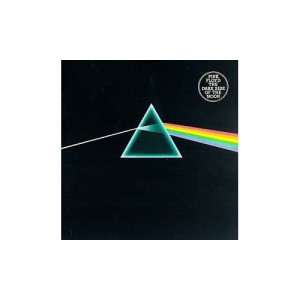
At the heart of the lawsuit are payments the label made to the band from digital sales at services like iTunes. In fact, the band says that it never authorized EMI to sell individual tracks.
Speaking for Pink Floyd, Robert Howe said the lawsuit also deals with the label’s ”entitlement to sell individual tracks, or indeed any tracks, other than in the original configuration of the Pink Floyd albums,” according to a story on the Telegraph.
The band apparently has a clause in its contract that forbids “unbundling.”
EMI is arguing that the unbundling clause only applies to the physical product.
Please take a minute to Tweet, Like, or Share this post with your friends.
Share
Funny thing is, their albums I would never buy a song at a time. Dark Side of the Moon must be listened to in sequence, or you miss the point. These guys need to ease up. People with any musical taste at all are going to buy the whole album. I did – twice!
Ease up. Money is the gateway drug to Pink Floyd. B)
True, but I bet a lot of people bought "Money," "Wish You Were Here," or a bunch of songs from The Wall. Not saying it's right, but I bet they did.
They should offer a digital Box Set, like the one released in the mid 90's, for a good price people will gladly buy it all.
DId Pink Floyd get paid? Yes. So what's the problem? Oh, that's right, iTunes didn't force the buying public to purchase a produce that they didn't want to buy. How shameful!
Did they buy them from those albums or from one of the 2 or 3 best of albums Floyd/EMI have put out themselves? Album integrity is all well and good except when Floyd don't care about album integrity, I guess.
Funny thing is, like Eric above, I agree that most Floyd albums should be listened to in their entirety, but they'll have to do better to promote that than just suing. Appears they are just suing EMI, though. iTunes does have the album-only option, so I guess EMI could have chosen to go that route and avoid this, but maybe this is a fight Floyd shouldn't bother with.
Hmm…I can understand an artist wanting to sell an entire album rather than a few tracks (I'm a little too cynical to think that most artists really feel their music can't be enjoyed in individual tracks rather than listening to the whole album – and that even goes for "Dark Side of the Moon"), but what if this means the potential buyer passes over the album because they can't buy the tracks they want? Is that really a better solution for the artist looking to profit from their work? I don't object to an artist wanting to have some control over how their product is distributed – I just think that the choice to restrict sales to the entire album is a bad one.
EMI is a record label. Pink Floyd is the artist. I side with the artist. If the contract states no unbundling, then there should be no unbundling. Do you think EMI gives a crap about customers? Yeah, right. I side with the Floyd, who don’t need any more money. They’d just like EMI to live up to a signed contract — for once. Go get ‘em Dave.
"EMI is a record label. Pink Floyd is the artist. I side with the artist. If the contract states no unbundling, then there should be no unbundling"
Here's an idea – why not reserve judgment until you have the facts? Pink Floyd says the contract forbids unbundling. The label says that clause only applies to physical media. Why would you assume that the artist is correct unless you are biased from the start?
Not to mention, of course, that it's rather odd that they allowed it to go on for so long before taking action.
[...] this week, Pink Floyd sued its record label, EMI, for selling individual songs on digital music services like iTunes. The High Court in London [...]