
I’ve had a bit more than 24 hours with Gibson’s newest guitar, the Dusk Tiger. I’ve had quite a few questions on Twitter, Facebook and email about how it works, so I thought I’d give you some of thoughts before posting the full review. 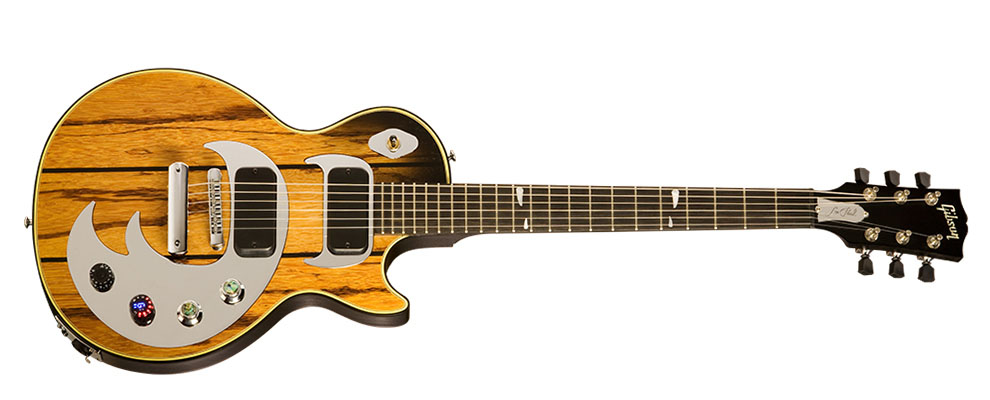
For those that don’t know, the Dusk Tiger is Gibson’s newest Robot guitar. That basically means that they combined some of the most recent technological advances with its expertise in making traditional electric guitars.
The Dusk Tiger is a Les Paul, which if you read my Christmas gift ideas for Mac using musicians story earlier this week, you know that the Les Paul is my favorite guitar of all time.
So, in no particular order, here are a few first thoughts on the Dusk Tiger:
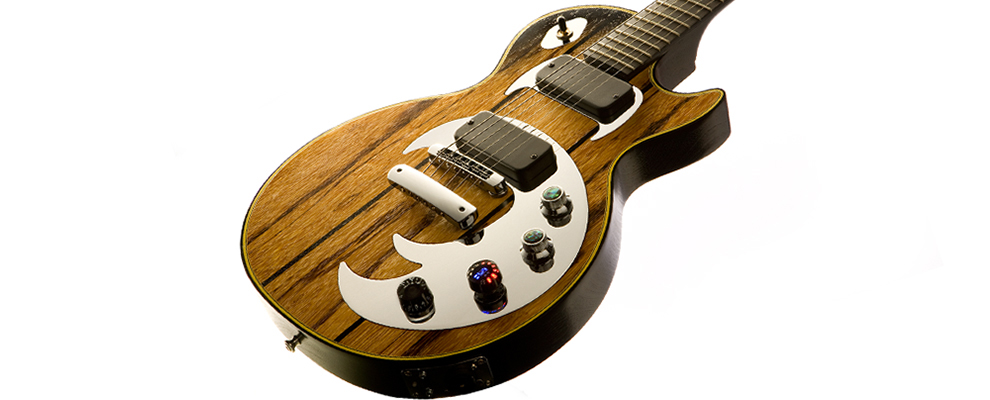
- It is a Les Paul, first and foremost. That may sound obvious, but one of the things that worries me about integrating technology into a traditional analog product is ruining the feel of the original. This is definitely a guitar first — it looks like a Les Paul and it feels like a Les Paul. The Robot Technology is conveniently tucked out of the way, so if you want to just play the guitar, you can do that. If you want to engage the tuner or Chameleon Tone, you can do that too.
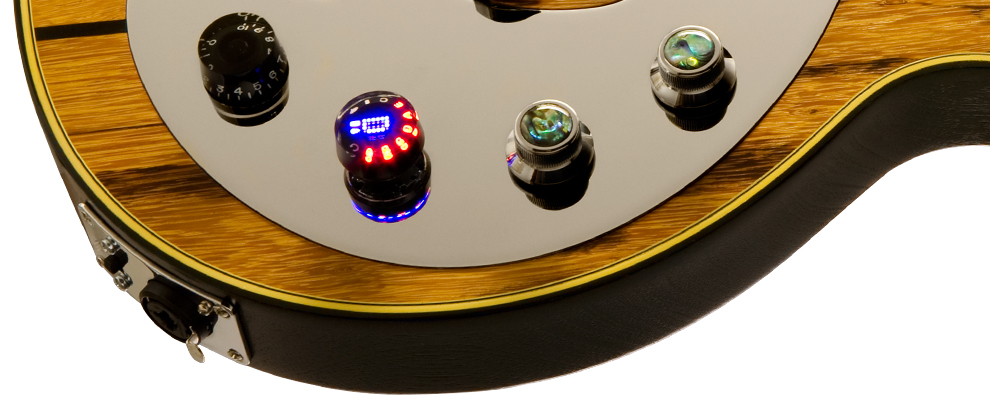
- The auto-tuning is brillant and fast. I did not expect the auto-tuning be work as well as it did. I pulled the knob, turned it to my desired preset, strummed the strings and it was done. Literally a few seconds. Impressive.
- There are four banks of presets. The Yellow one is where you can save your presets.
- The knob goes in and out very easily, but with enough resistance where it’s not going to engage by itself.
- You can switch to different banks by gently pressing the knob in — not enough to disengage the tuner, but about half way. This has taken me the most time to get used to, but now that I am, I can zoom around the presets really fast.
- You need a stereo instrument cable to plug the guitar into the Gibson interface so the computer will recognize it.
- I used my Mac Pro and the Gibson software app instantly recognized the guitar.
- You need to pull the tuning knob in order for the software to connect to the guitar. It’s kind of like an “on switch” that activates the electronics.
- Making or adjusting presets is very easily done onscreen.
- Syncing is also very quick.
- I haven’t dug into the Chameleon Tone yet, but I will.
- I’ve tried all kinds of alternate tunings, from Drop D to Standard.
- The strings do stretch, just like a normal guitar, so take that into account when setting it up and tuning.
That does it for now. If you have any questions, post in the forums below or on Twitter.